Testing phase

The team is currently hard at work testing at Royal Vancouver Yacht Club, all while preparing the Thunderbird 2013 to travel across the continent to Gloucester for the competition in June.

Recently we have been mostly working on getting the sailing logic in a proper order so that the code can be easily combined for the different challenges. The code is fundamentally built around small sailing logic blocks, that once combined will give us the different challenges needed for the competition. In addition to this basic sailing logic, we have also been hard at work getting the stationkeeping up to speed with the new hardware on board.

Onshore testing at UBC

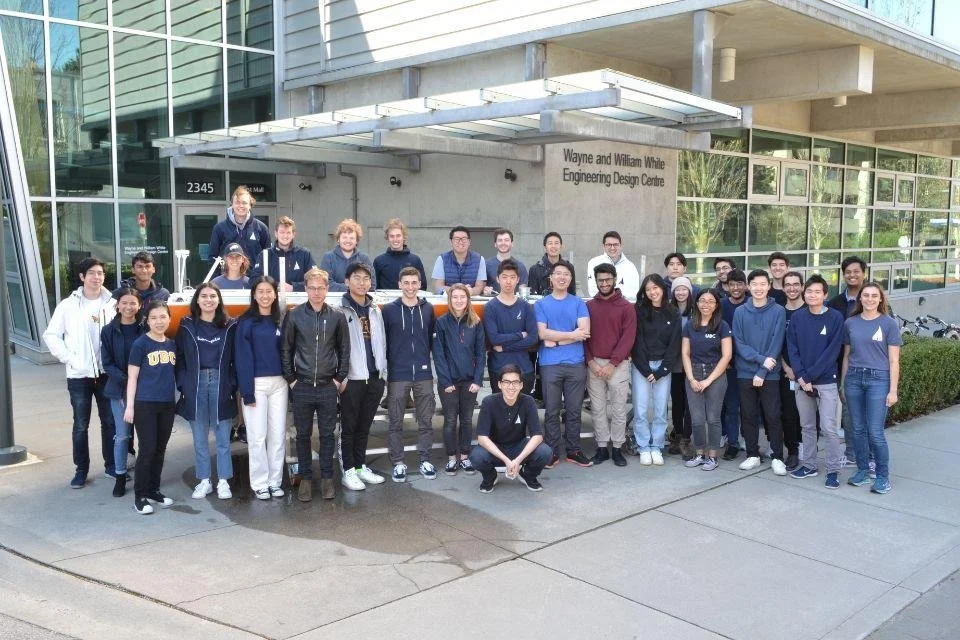
Some of the team members in front of the Thunderbird 2013

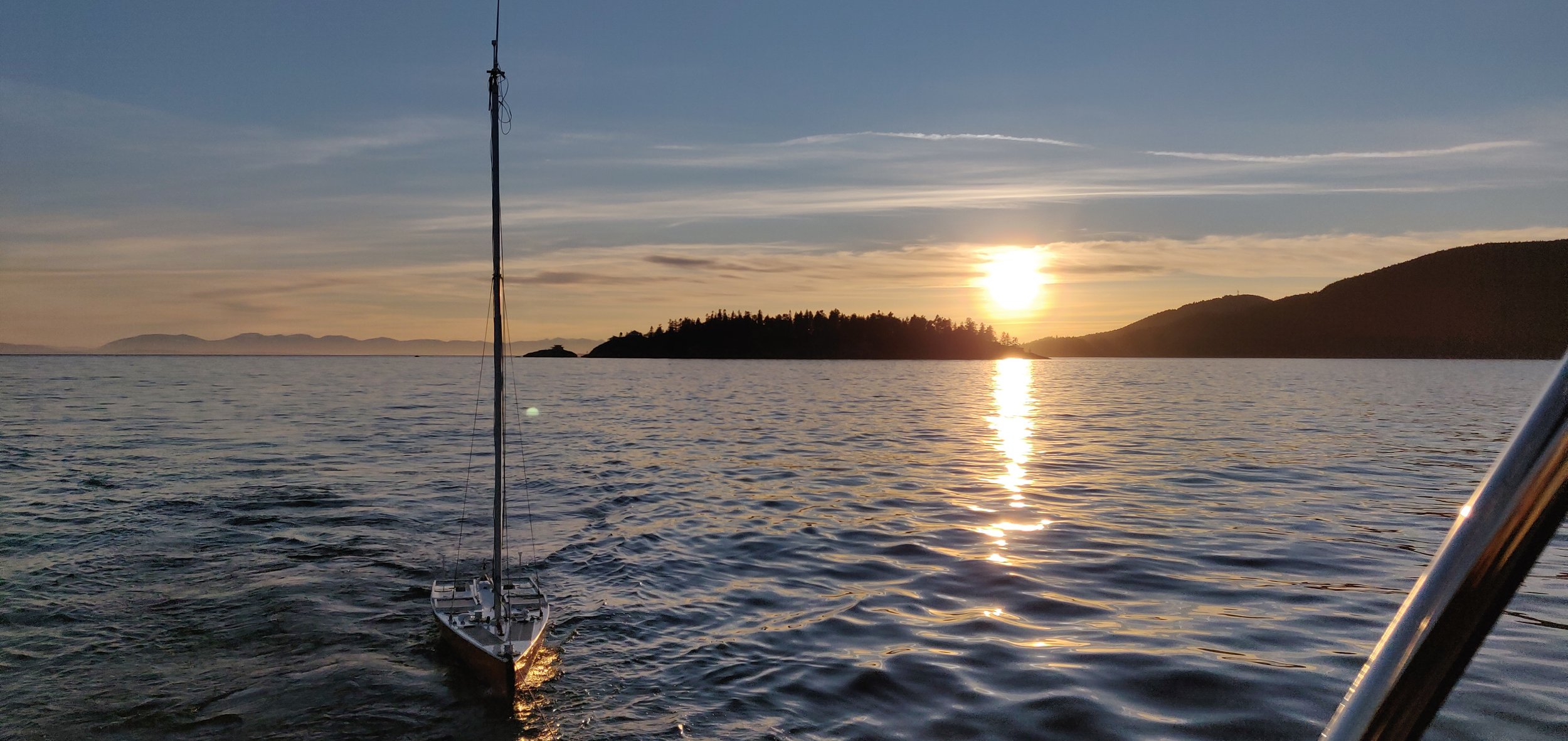
Thunderbird 2013 is sailing!

After months of hard work and dedication to the project, we can now proudly say that we have sailed the Thunderbird 2013 for the first time.

A lot of curious sailors around the robotic sailboat.

It all came together very well in the end, and with the help from the good guys at Ferreira Collision Centres, we have a beautifully painted keel and rudder too!

From now on a lot of on-water testing awaits us as it is getting closer and closer to the SailBot competition in Gloucester, June 9th to 14th.

We will keep on updating the website with info about the testing we do, and a lot of good pictures and video.

Rudder before heading off for painting.

Rob giving the keel some finishing touches before painting.

Thunderbird III Wired

Want to see the all new, completed electronic package on Thunderbird III? – Just flip over the deck hatch holding the GPS board and have a look.


Outside the electronics bay:  from bottom of the photo: Sail winch, next deck hatch forward – rudder servo, left – Hemisphere GPS board, LIPO battery (taken from its’ hatch in front of the mainsheet post).

In the electronics bay – top to bottom: Voltage regulator 5 volts – 8 amps, WIFI USB dongle, Raspberry PI computer, GPS shifter module, APM microprocessor board, USB / APM adapter.

YES, this boat does have a ton of computing power!

Out of frame: Windsense mast with the wind direction encoder and R/C antenna, WIFI antenna embedded in the backstay, transom mounted flash voltage readout.

Other electronic  items: NONE

The boat has a single watertight electronics bay which is 4 ½” wide, 2 ½” deep and 29” long – running from the transom forward.

One Coat of Primer Later

First coat of primer on the new UBC SailBot raceboat

This is a very exciting week for the team, and especially the MECH team, as the boat has been in for the first coat of primer. Already we can see that the new boat is going to look amazing when it is painted. The paint job is scheduled to be done by Thursday, so we will keep you posted on how it looks when it’s back from painting. When the MECH team have not been busy sanding between the primer coat, they have gotten the bow-bumper ready for manufacturing and continued the work on the keel and rudder.

The other subteams have been busy getting ready for installing electronics and software in the final raceboat, so this week have been full of refactoring and fixing the last things needed before the on-water testing can start.

Final float-testing before deck went on the new raceboat. Conclusion: it floats!

In For Painting

At UBC SailBot the new sailboat is well underway to go in for painting on March 21. We have partnered up with the nice people at Ferreira Collision Centres to get the sailboat painted this year. In the last week we have been keeping the MECH team very busy joining the foredeck and the maindeck while prepping the hull for painting. They also performed a float test of the new boat down by the ocean, and not counting some small holes we had to fill in, our new boat floats perfectly. The remaining job before March 21 is to get the deck and hull joined, and do some small detail work for the paint to look as good as possible. We will not give out the color of the boat just yet, but we can comfortably say that is gonna be one of the nicest robotic sailboats out there.

Electronics layout #3 complete

Final layout with our amazing Hemisphere GPS on top.

A second big milestone was hit this week as electronics layout number three, the final raceboat layout, was completed. We now have the core electronics ready for the mechanical team to install it in the raceboat. As you can see on the photo above, the electronics fit perfectly on the plastic piece that will go inside the waterproof electronics box. This year the electronics box have been designed from the ground up to be simpler and much more waterproof. We don’t have to worry about having the boat full of waterproof connectors as all the electronics will be housed in one single, well-built box. This enables us to make changes and even replace malfunctioning electronic components to the electronics as we go. See the actual box on the picture below.

Our famous electronics box.

And over in the mechanical team we continuing the good pace we have been going at lately. We are now 90% done with the deck, and 75% done with the keel. This means that we will soon have the foredeck and main deck installed on the hull ready for painting. We are expecting to be on the water with the raceboat at the end of March.

Rudder servo placement.

Mockup testing started

This week marked a big milestone for the team; the start of mockup testing! So far we have done extensive computer testing of our sailing logic and GUI, but now we have implemented the code onto our onboard computer and microcontroller on the mockup. This past Saturday the UI and Control Logic team went for the first time around a field at UBC testing with the mockup. We can proudly say that our point to point sailing logic is working all the way from the GUI and the control code to the servos and sensors, and back again. Next up is the tack and jibe maneuver testing.

Sailing Simulator in GUI

Thanks to the great work by David and Josh we now have, as mentioned in the previous blogpost, a sailing simulator in the UBC SailBot GUI. This simulator provides the sailing logic with generated wind conditions for us to try out all the different SailBot challenges without the need for the raceboat to be in the water. It’s all done on a computer, which makes this an excellent tool for preliminary testing of the sailing logic code.

Check out the video of the simulator in action: